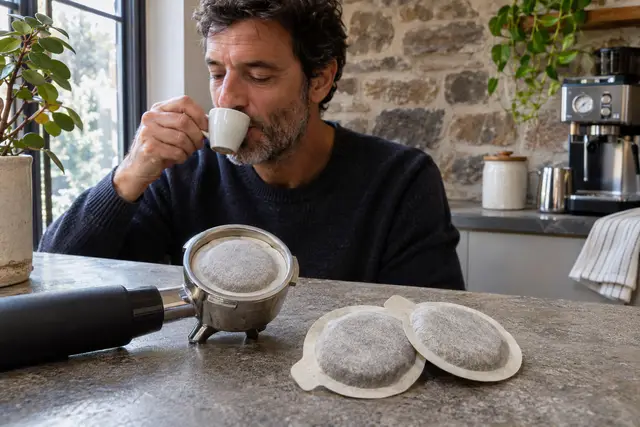
A coffee pod machine for 44 mm ESE pods is a pump-driven espresso appliance that accepts rigid paper pods 44 millimetres across, in the open format known as E.S.E., short for Easy Serving Espresso. Each pod holds about seven grams of finely ground coffee pressed inside a filter-paper shell. The portafilter takes the pod, the pump forces hot water through at high pressure and the espresso flows out in a few seconds. The system is aimed at people who want a real espresso without grinding or tamping.
An open standard
The E.S.E. format belongs to no machine maker: it describes an object, a forty-four-millimetre pod, rather than an appliance. Several roasters therefore make pods that fit machines from different brands, which leaves you free to choose your coffee and avoids being locked into a single range.
There is a downside to this openness: not every product sold under the label is equal. The weight of coffee, the fineness of the grind and the quality of the paper depend on the producer, which explains clear differences from one make of pod to another.
What is inside the pod
An E.S.E. pod consists of a compressed round of coffee wrapped in stiff filter paper that keeps its shape. The target weight is around seven grams, the dose for a single espresso. The pod is often slipped into a sealed individual sachet, which preserves the aroma until the moment of brewing.
The paper has two jobs: to hold the round evenly packed and to spread the water over the whole surface. This is what makes the result repeatable, cup after cup, even without any barista experience.
The pump and the pressure
A vibration-pump machine commonly reaches fifteen bars, and the effective pressure at the coffee is about nine bars, the reference value for espresso. This pressure extracts the aromatic oils from the coffee and forms the crema, the fine light-brown layer that tops the cup.
Water temperature matters as much as pressure. Ideally it sits between ninety and ninety-five degrees. A machine that heats poorly produces a sour, thin espresso.
The right portafilter
The portafilter of a compatible machine has a basket whose diameter matches the pod. Some models have a single basket reserved for pods, while others supply two baskets, one for pods and one for ground coffee.
A pod should drop flat into the basket, without too much play at the edges. If it is too small, the water runs round the sides and the coffee comes out watery; if it is wedged in, it may tear when you lock the handle.
Step by step: making a good espresso
- Fill the tank with fresh water and wait until the heating is complete.
- Run a little water through empty to pre-heat the circuit and the portafilter.
- Lay the pod flat in the basket and lock the portafilter in place.
- Start the extraction and stop after roughly twenty-five to thirty seconds for an espresso of about thirty millilitres.
- Remove the spent pod by pushing it out or lifting it carefully: the basket is scalding.
In the cup: strength and crema
An espresso made from a pod of this standard is dense, with a stable crema a few millimetres thick when the pod is fresh. A thin, pale crema often betrays a pod that is too old, a leaking basket or water that is too cold.
For a longer coffee, it is better to use a double pod or to add hot water after the extraction. Letting a single pod run on for longer makes the drink bitter.
Compatibility with other formats
A forty-four-millimetre pod will not sit in a holder for sixty-millimetre soft pods, nor in a capsule housing. Only machines that state clearly in the manual or on the basket that they accept it will take it. Some portafilters also come with a small basket for loose grounds.
Before buying pods in bulk, try a small box: a pod whose paper is thicker or thinner than average changes the flow time.
Routine maintenance
Rinse the portafilter and basket in hot water after each use, without any harsh detergent. The seal of the brewing head clogs with fine powder; a wipe with a damp cloth keeps it supple. Empty the drip tray every day, because standing water soon smells bad.
Descaling is essential with hard water. Use the product recommended in the manual, then rinse by running several tanks of clean water through. A scaled-up machine heats less well and the pressure collapses.
Cost and yield
An E.S.E. pod generally works out cheaper than a rigid capsule, with an initial outlay close to that of entry-level pump machines. When comparing, work out the cost per cup including descaler, any water filters and wear on the seal.
The yield is constant: one pod makes one cup, with no wasted grounds, no grinder to adjust and no complicated mechanism to clean.
Keeping your pods fresh
Keep the pods in their sealed sachet, away from light, heat and damp. An opened box can be closed with a clip, but the aroma fades within a few days. Do not store pods next to spices or strong-smelling products: the paper absorbs the smells around it.
Waste and sorting
A used pod is a round of spent grounds wrapped in paper. If it is certified compostable, it goes in the compost bin or the council food-waste bin. If not, it joins the household rubbish; the individual plastic sachet follows local sorting rules, which the local waste service can confirm.
Coffee grounds can also be used in the garden, in a thin layer, provided the compostable paper is separated from the rest.
Safety in use
An espresso comes out hot and under pressure. Never remove the portafilter during extraction, let the pressure drop before unlocking it and keep the machine out of children's reach. Use it on a flat, dry surface, away from any splashes, and unplug it before cleaning the base.
Alternatives to the format
Anyone who wants more flexibility will choose a machine that takes both pods and ground coffee. Anyone who prefers a fully automated routine will look at capsules. Anyone who wants no waste will use ground coffee with a classic portafilter.
Can an E.S.E. pod be used twice?
No, the round is spent after the first pass and a second extraction gives a very bitter drink.
Should the portafilter be pre-heated?
Yes, a cold portafilter chills the water and reduces the crema.
Choosing your pods
Look closely at the packaging before buying. The forty-four-millimetre diameter should be clearly shown, along with the weight of coffee per pod. A note of origin, roast type and best-before date helps with comparison. Pure arabica blends give a milder, more fragrant espresso, while blends with a share of robusta bring more body and crema.
Individual sachet packing is a good sign of freshness. Boxes of fifty pods or more are only worth it for regular daily drinking, otherwise the last pods lose their aroma.
Common problems and remedies
- The coffee runs too fast: the pod is too small for the basket, the seal is worn or the round is badly packed.
- The coffee barely runs: the circuit is scaled, the pod is too compact or the nozzle is blocked.
- There is no crema: the water is not hot enough, the pod is too old or the pump pressure is too low.
- Grounds end up in the cup: the paper is torn, often because the portafilter was locked too roughly.
A thorough clean of the shower screen under the brewing head, using a soft brush and hot water, clears up a large share of these faults.