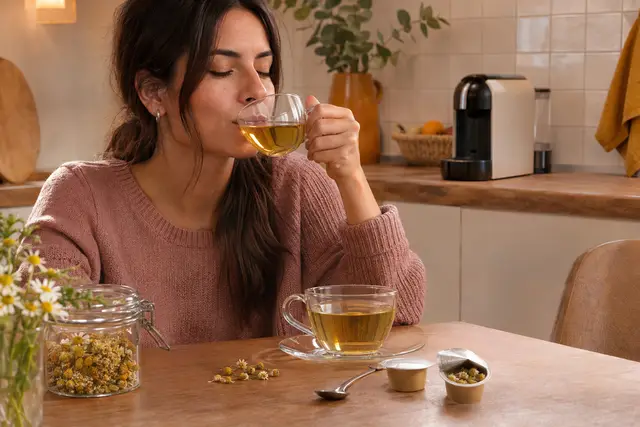
A ginger tea pod is an individual portion of dried, ground ginger rhizome, sometimes combined with other plants or citrus peel, sealed in a paper filter or a small capsule. The resulting infusion is golden, sharp and warm in the mouth, with no theine or caffeine. The portion saves you from peeling and grating the fresh root. It suits those who like spiced drinks, in cold weather or after a hearty meal, and those who avoid stimulants. It is a drink of pleasure, not a medicine.
A root that is not a root
What is called ginger root is in fact a rhizome, a fleshy underground stem of the plant Zingiber officinale, of the ginger family, like turmeric and cardamom. Native to South-East Asia, the plant is grown in many tropical countries, with India and China among the main producers. The rhizome is harvested after several months of growth, washed, then cut into slices or pieces before being dried.
What makes it sharp
The sharp taste of ginger is due to phenolic compounds, the gingerols in the fresh root. On drying, these turn partly into shogaols, which are sharper still. This explains why an infusion of dried ginger is more incisive than one of fresh ginger, which has a more lemony and floral taste. In a portion, the ginger is ground into fragments, which releases its aromas quickly into the hot water.
Preparing the cup
The rhizome stands up to boiling water. Pour water at 95 or 100 °C over the portion and leave to brew for seven to ten minutes for a forthright drink; five minutes is enough for a milder cup. A longer infusion accentuates the burning sensation in the throat without improving the scent.
- Cover the cup to keep the volatile aromas.
- Taste at five minutes, then decide whether to extend.
- Add honey or lemon at the moment of drinking, rather than during brewing.
Pairings that work
Ginger likes lemon, which brings freshness, honey, which rounds off the heat, and cinnamon or clove for a winter cup. With orange, mint or lemongrass, it becomes lighter. It is also found blended with green or black tea, but a pure ginger infusion remains caffeine-free. In cooking, a leftover strong infusion flavours a pumpkin soup, a fruit salad or a marinade.
Taste, texture and serving
The drink leaves a warmth that rises slowly from the mouth to the throat, with an earthy, lemony hint. Serve it very hot, in a thick cup. Iced, it makes a base for a sharp lemonade: let it cool, sweeten it lightly and top up with sparkling water and lime. Many enjoy a cup after a hearty meal for its warming effect, without this amounting to a promise of digestion.
Precautions
Ginger is not harmless for everyone. Pregnant women, people taking anticoagulant medicines, those who suffer from gallstones, reflux or an ulcer, and young children should ask a doctor or pharmacist for advice before regular, abundant consumption. Too large an amount can cause heartburn. In case of allergy or poor tolerance, stop the drink. No therapeutic effect can be promised for this infusion.
Compatibility with machines
Depending on its model, a pod machine accepts either 44 mm filter paper or the small-format capsule. Dried ginger releases oils and resins that leave a lingering smell in the circuit; rinse the circuit with clear water after the drink and descale regularly. The portion must be designed for the machine, because fragments that are too large can block the filter.
Storage
Dried ginger keeps better than many plants, but it loses its bite with exposure to air. Each portion stays in its sealed sachet, dry and away from light. A box kept near the cooker deteriorates faster. If the sachet is damp, if a musty smell appears or if mould develops, throw the portion away. The best-before date gives a guide to freshness.
Fresh, dried or powdered ginger
Three forms coexist. The fresh rhizome, grated or sliced, gives the most fragrant infusion, but takes preparation time. The powder is convenient, but it clouds the drink and can leave a deposit. The dried fragments in the portion are a compromise: they infuse quickly and are removed cleanly. Each form has its uses, and the portion suits those who want a consistent drink without preparation.
History and uses
Ginger has been used for a very long time in the kitchens and traditions of Asia, before reaching Europe along the trade routes of antiquity and the Middle Ages. It has served to lift dishes, preserve foods and flavour drinks. Today it goes into gingerbread, sauces, curries, confectionery and craft sodas. The infusion is its simplest use, requiring only hot water and a little patience.
Choosing your portion well
The list of ingredients should state ‘ginger’ clearly in first position for a pure infusion. A quality portion gives off a warm, peppery smell on opening, with a lemony background. The fragments are light beige to golden, never brown or black. If the list contains sugar, flavouring or pieces of peel, take them into account in the final taste. A portion that barely smells may have lost its scent through long storage, or come from a batch of modest quality.
Frequent mistakes
The first is to extend the infusion to obtain a very strong cup: the burning sensation then overwhelms everything else. The second is to pour lemon juice into water that is still boiling, which destroys part of its freshness. The third is to drink large amounts on an empty stomach, which can irritate the stomach. Finally, some forget to rinse the cup: ginger leaves a persistent smell that mingles with the following drinks.
Ideas for variety
For a winter version, add a cinnamon stick, a clove and a slice of orange. For a refreshing version, slip in mint leaves and a squeeze of lime juice, before serving lukewarm. A hint of turmeric and black pepper gives a golden drink inspired by recipes from the Indian subcontinent. These additions are made in the cup, without altering the portion itself.
Sorting and alternatives
The paper filter and the used rhizome can go to the compost if the packaging says so; otherwise, to household waste. Aluminium capsules, once emptied, join the collection of metal packaging. As an alternative, you can infuse a few slices of fresh ginger in a teapot, with a little lemon, for a livelier drink that limits individual packaging.
Does ginger mix with milk?
The acidity of a lemon blend curdles milk, but a plain infusion pairs fairly well with plant-based milk and mild spices.
Can it be drunk in the evening?
It contains no caffeine, but its sharp warmth is poorly tolerated by some at bedtime.
Is ginger as strong in an infusion as in cooking?
It is clearly milder, because water extracts fewer sharp compounds than cooking in a sauce or a raw piece eaten crisp.