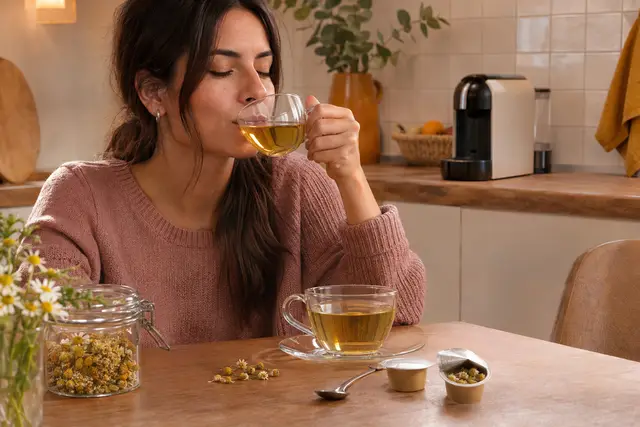
A verbena tea pod is an individual portion of dried leaves of lemon verbena, a plant with a scent of lemon, placed in a paper filter or a small capsule. The resulting infusion is pale yellow, light and fresh, with no theine or caffeine. The portion lets you prepare a consistent cup without weighing the leaves. It suits those who like soft hot drinks, notably after dinner, and those who wish to limit stimulants. It is a drink of pleasure and tradition, not a medicine.
A plant with a citrus scent
The verbena used in infusions is lemon verbena, botanical name Aloysia citrodora. It is native to South America and has settled in the gardens of southern Europe, where it is grown for its lance-shaped, rough and very fragrant leaves. Its lemon smell comes from essential oils rich in citral, a compound also found in lemongrass and lemon zest.
It should not be confused with common vervain, Verbena officinalis, a different plant used in another way in traditional herbal medicine. On a box, the Latin name removes any ambiguity.
From plant to portion
The leaves are harvested in summer, then dried away from light to preserve the aromatic oils. Drying that is too hot or too long loses the scent and turns the leaves yellow. In the portion, they are broken into smaller pieces to fit a filter. A good portion keeps a pale green colour and a clear lemony smell; grey or odourless leaves indicate an old product.
How to prepare the infusion
Verbena is prepared with hot water, around 90 to 95 °C, without a vigorous boil that would evaporate the aromatic oils. Allow five to ten minutes of brewing, covering the cup to hold in the scents. There is no risk of marked bitterness, which makes the preparation forgiving. The taste stays fresh, scented with lemon and slightly grassy.
- Pour hot water over the portion and cover.
- Wait five to ten minutes depending on the intensity wanted.
- Remove the portion before drinking.
Taste, accompaniments, variations
The cup offers a gentle lemon taste, with a touch of mint and flower. A little acacia honey softens it without covering it. You can add a slice of lemon, a few fresh mint leaves or a little dried orange peel. Iced, the infusion is very refreshing: let it cool, then serve it over ice cubes. It goes well with dry biscuits, madeleines and desserts made with pale fruit.
A drink without theine, but not without precautions
Verbena contains no caffeine. It is therefore enjoyed in the evening, but its effect on sleep is not definitively demonstrated: no therapeutic power should be attributed to it. Pregnant or breastfeeding women, young children and people on medication or with a chronic illness can ask a doctor or pharmacist for advice before drinking it regularly. In case of an allergy to aromatic plants, reading the composition is essential. An infusion never replaces medical advice in the face of persistent sleep problems.
Compatibility with machines
Each appliance accepts only one type of portion, 44 mm paper or compact capsule, and the machine must match the chosen format; verbena leaves, being light, let the water through easily. The aromatic oils scent the circuit: rinse it with clear water after the drink so as not to pass lemon on to the next coffee. Regular descaling maintains the water temperature.
Storage
Essential oils are fragile and evaporate. Keep the portion in its sealed sachet, dry, away from light and heat. A dark cupboard is ideal. A well-kept verbena portion holds its scent for several months; after the best-before date, the infusion fades, without becoming dangerous if it was stored dry.
History of use
Introduced to Europe at the end of the eighteenth century, lemon verbena spread above all in the south of France and in Spain. Over time it became one of the most common plants of the family infusion, served after the evening meal. Its cultivation remains simple in a mild climate: it fears frost and is pruned in spring so that it grows back denser. This presence in gardens explains its status as a drink of tradition rather than of fashion.
Recognising a quality portion
The list of ingredients should mention lemon verbena or Aloysia citrodora, and nothing else in a pure infusion. The leaves appear olive green to light green, never brown. The lemon smell can be perceived as soon as the sachet is opened. In the cup, the expected liquid is clear, with a very light green tinge. A taste of hay or dust shows that the plant has aged, or was dried in poor conditions.
Verbena and other plants to infuse
Verbena goes well with mint, for a fresher cup, with chamomile, for a gentle late-evening drink, and with lemon balm, whose scent is also lemony. It also accepts a hint of aniseed or fennel. These blends are found in portions, but it is better to read the composition, as some contain plants that require particular care, such as liquorice for people with high blood pressure.
Frequent mistakes
Pouring water at a rolling boil over the leaves evaporates part of the scent. Letting the portion brew for too long, on the other hand, brings no bitterness but a more vegetal taste. Drinking the infusion very hot should also be avoided: above 65 °C, it burns the mouth and palate. Finally, storing the box near the cooker or a sunny window speeds up the loss of scent.
Times of day
Verbena infusion is traditionally drunk after dinner. It also suits the middle of the afternoon, in place of tea, or to go with a light breakfast. Lovers of cold drinks prepare it in large quantity and keep it in the refrigerator, with slices of lemon and a few mint leaves, for a sugar-free drink that makes a change from plain water.
Sorting and alternatives
The paper filter and the used leaves go to the compost if the packaging says so; otherwise, to household waste. Aluminium capsules, once emptied, are sorted with the metal packaging. To avoid individual packaging, you can dry a few leaves grown in a pot and infuse them fresh or dry: lemon verbena can be grown in a pot, sheltered from frost.
Does verbena make you sleep?
No solid proof allows us to say so. The hot, calm, caffeine-free drink simply forms part of a relaxation ritual.
Can it be mixed with tea?
Yes, but the blend then contains caffeine. Verbena infusion on its own remains free of theine.
Can the leaves be reused for a second cup?
A second infusion gives a much paler drink. The aromatic oils were largely extracted the first time, and it is better to use a fresh portion to recover the scent.
Does the infusion need sweetening?
It is not essential. The lemon scent already gives an impression of freshness; a little honey is an option, according to taste, but the natural taste of the plant is often enough.
Is growing your own verbena difficult?
No, provided you offer a sunny spot and shelter from frost. In a pot, bring it indoors in winter to a bright, cool room, and water in moderation.