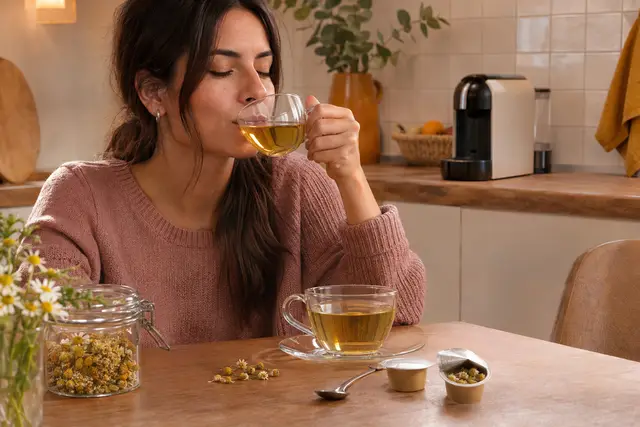
A digestion tea pod is a single portion of dried herbs, such as peppermint, fennel, aniseed or ginger, sealed in a paper filter or a capsule. It is infused in hot water, in a cup or in a suitable machine, and contains neither caffeine nor theine. It is traditionally drunk at the end of a meal by adults who enjoy a hot, fragrant and light drink. It is an ordinary everyday food product, which in no case replaces medical advice or treatment.
Herbs and ingredients in the blend
Recipes designed to accompany the end of a meal rest on aromatic herbs traditionally associated with digestive comfort: peppermint, fennel, green aniseed, ginger, verbena, chamomile, lemon balm or rosemary. Most of these plants belong to everyday cooking, which explains their familiar taste and their long use as infusions.
Each herb has its aromatic role. Mint gives freshness, fennel and aniseed bring an aniseed-like sweetness, ginger a peppery warmth, and verbena a lemony note. A balanced blend tries to prevent any single ingredient from dominating, because too much mint quickly tires the palate.
What to expect from the drink
A hot infusion after a meal above all brings a feeling of well-being: the warmth relaxes, the fragrance pleases, and the pause helps to slow the pace. The effects attributed to the plants rest on traditional use and vary from one person to another. The drink cures no digestive disease and replaces neither medical advice nor treatment.
Severe or persistent abdominal pain, blood in the stools, unexplained weight loss or repeated vomiting all warrant a consultation, whatever herbal tea is being drunk.
Soft pods and capsules: compatibility
As with other single-serve infusions, the soft filter-paper pod of 60 to 70 mm in diameter is used in soft-pod machines. The rigid capsule, for its part, is limited to its original system. Ginger and fennel seeds, harder than leaves, call for a sturdy filter and water hot enough to release their aromas.
Before settling on a blend, it is therefore necessary to check the type of machine and its volume setting. A cup of 150 to 200 ml suits a drink taken after a meal well.
Preparation and infusion time
Seeds and roots withstand a longer infusion than fine leaves. Five to ten minutes of soaking by hand gives a full taste; mint, however, turns bitter if it stays too long in contact with very hot water. Removing the pod in time guarantees a rounder flavour.
In a machine, the contact time is short, so hard plants release fewer aromas. A blend intended for this type of appliance is therefore often more concentrated than one sold in bags.
Before or after the meal?
Custom has it that an infusion of this kind is drunk at the end of the meal, when conversation lingers. Nothing obliges you to keep to this timing: the important thing is to drink it warm rather than scalding so as not to irritate the mouth or the oesophagus.
Precautions and contraindications
Peppermint can aggravate gastro-oesophageal reflux in some people and is not suitable for young children, notably because of the menthol. Fennel and aniseed contain estragole in small quantities: regular use is not recommended for pregnant women, breastfeeding women and young children without professional advice. Ginger can interact with blood-thinning medicines.
In the case of pregnancy, breastfeeding, chronic illness, an ulcer or ongoing treatment, a pharmacist or doctor should be consulted before regularly drinking a blend of herbs. Allergies, for example to the carrot family or the mint family, also mean reading the list of ingredients.
Taste and pairings
A blend of mint and verbena accompanies a rich or heavy meal, through its contrast of freshness. A preparation of ginger and lemon suits winter dinners. Aniseed infusions go with light desserts, while chamomile calms sweet flavours. The drink is taken without sugar; a little honey remains possible for adults.
Price, storage and reading the label
The price per cup reflects the quality of the herbs and their origin. An ingredient list that names whole plants, rather than a mere flavouring, generally indicates a richer product. Organic labels tell you about the method of cultivation, not about any particular effect. Health claims, strictly regulated by European rules, may appear on packaging only if they are authorised.
Aromatic herbs lose their fragrance in the open air. The box should stay closed, away from light and damp. A softened filter paper or a musty smell signals a product to be thrown away.
Sorting, recycling and alternatives
Compostable paper pods are sorted according to the wording on the packaging: home compost or food waste where such collection exists. Plastic or aluminium capsules fall under the rules of the municipality, which vary greatly from one area to another. The outer cardboard goes into the paper and cardboard stream.
Among the alternatives are paper bags, dried loose herbs with a reusable infuser, or slices of fresh ginger infused in hot water with a little lemon. This last option takes more preparation, but it gives a drink with a livelier taste.
Ideas for fitting the drink into your meals
Serving the herbal tea in small cups prolongs a dinner among friends and advantageously replaces a late coffee. At a restaurant as at home, offering a caffeine-free drink allows every guest to stay at the table without worrying about sleeping badly.
For festive meals, a tray with two or three blends, a mint and verbena, a ginger and lemon and a fennel and aniseed, lets everyone choose according to taste. The same approach applies at work, where a soft-pod machine offers an alternative to sugary drinks.
Lastly, a well-prepared infusion is worth more than a sophisticated blend that is badly measured: respecting the soaking time and the quantity of water does more for the quality of the cup than any complicated recipe.
Frequently asked questions
Does the drink make you digest faster?
No solid evidence allows a precise effect to be promised. The pleasure of a hot drink and the pause it imposes mainly contribute to a feeling of comfort, which is already not negligible after a heavy meal.
Can you drink several cups a day?
The leaflet states the recommended number of cups. Beyond that, the intake of plants rich in essential oils, such as mint or aniseed, is not advisable without professional advice, especially when taking medication.
Which blend should you choose after a heavy meal?
Palates used to fresh flavours prefer mint combined with verbena. Those seeking warmth in the mouth turn to ginger and lemon. For a gentler drink, chamomile and fennel make a popular pair, to be reserved for adults with no contraindication.
Common mistakes to avoid
Pouring water at a full boil over fresh or dried mint makes it harsh. Leaving the pod in the cup until the last mouthful gives too tannic a taste. Drinking the herbal tea straight after preparing it risks burns, whereas waiting a few minutes is enough to enjoy it without risk.
You should also avoid adding blends of herbs together without looking at their composition: two different boxes can contain the same plant and lead to exceeding the recommended quantity.