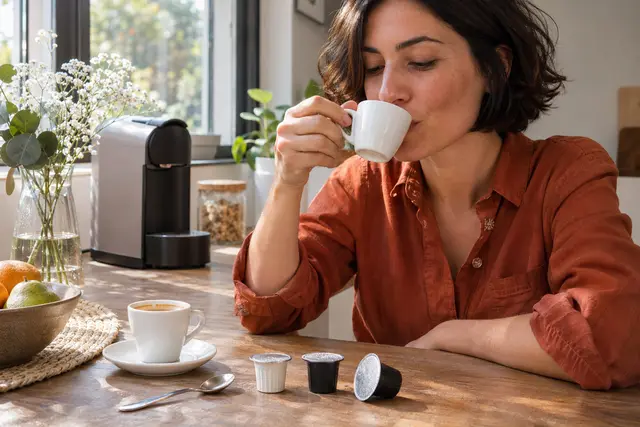
Preparing a coffee pod without a machine means using the portion of ground coffee like ordinary coffee, outside the appliance for which it was designed. The soft pod, made of filter paper and a fine grind, can be steeped in a cup, opened to fill a plunger or filter coffee maker, or used to get by when travelling. The result does not equal an espresso made under pressure, but it gives a drinkable coffee, as long as the water is at the right temperature.
Why look for an alternative
A machine breakdown, a trip away, a holiday rental with no equipment or a wish for a change: there are many reasons to do without the appliance. The pod, already dosed and wrapped, has the advantage of making improvisation easy. No weighing, no grinding: the coffee is ready to serve as a base.
Keep in mind, however, that the grind of a pod is designed for extraction under pressure, short and intense. Without pressure, extraction is slower and gentler, and the result comes closer to filter coffee.
The water temperature
Temperature matters more than the tool. Boiling water scorches the coffee and makes it bitter; water that is too tepid gives a sour, weak cup. The ideal is a little below boiling point: let the water rest for thirty seconds to a minute after the kettle switches off, then pour. This simple rule suits all the methods that follow.
Method 1: steeping in a cup
This is the simplest. Place the whole pod in a cup, pour in hot water, cover with a saucer and wait a few minutes. Then gently press the disc with a spoon to extract the liquid, and remove it.
- Advantage: no equipment.
- Drawback: the paper may tear and let fines through.
- Tip: choose a wide cup, which lets you immerse the disc completely.
The coffee obtained is light. To strengthen it, use two pods for a large cup, allowing more steeping time.
Method 2: open the pod and use a plunger coffee maker
Carefully cut the paper with scissors, pour the grounds into the plunger coffee maker, add hot water and wait about four minutes before lowering the filter. The fine grind of a pod sometimes passes through the mesh; this is normal, simply let the sediment settle at the bottom of the cup. This method gives a stronger coffee than direct steeping.
Method 3: the manual filter
Place a paper filter in a filter holder set over the cup, pour in the grounds from the opened pod, then pour hot water over in circles, in several stages. The taste is cleaner and clearer. As the grind is fine, the flow is slow: pour in small amounts to avoid overflowing.
Method 4: the stovetop moka pot
The grind of a pod is a little fine for a moka pot, but it works if you do not tamp. Fill the base with water to below the valve, place the grounds in the basket without compressing them, then heat gently. Keep watch: take it off the heat as soon as the coffee stops rising, to avoid a burnt taste. Use several opened pods to obtain a small pot.
Method 5: Turkish-style or saucepan coffee
In a small saucepan, pour hot water and the grounds of an opened pod. Heat gently without boiling, stir, then let it rest for a few moments so that the grounds settle at the bottom. Serve by pouring carefully. The texture remains thick, and the sediment is part of the pleasure.
Rescuing a disappointing cup
- Too bitter: the water was too hot or the steeping too long; reduce the time.
- Too weak: increase the amount of coffee or reduce the volume of water.
- Too sour: the water was not hot enough; let it rest for less time.
- Full of fines: strain through a paper filter or let it settle.
A little hot milk or a pinch of sugar softens the bitterness when you are getting by.
Hygiene and safety
Handle boiling water with care, away from children, and never fill a cup to the brim. Wash the utensils in hot water after use, because coffee leaves greasy residues. If the pods have been opened or stored in an uncertain way, check their condition before opening them: dry paper, normal smell, supple grounds.
Travelling or camping
Pods slip easily into a bag, but once opened, the grounds quickly lose their freshness. Carry them in their packaging and open them only when you use them. A small travel kettle, a camping stove or a flask of hot water is enough. For the washing-up, bring a bag to collect the grounds rather than throwing them into the countryside.
When to buy a machine instead
If you find yourself regularly preparing pods without a machine, suitable equipment improves quality and comfort. A small appliance with a 44 mm portafilter costs less than you might imagine, and brings the pressure that the makeshift methods lack.
Frequently asked questions
Can you reuse the pod after steeping?
A second steeping gives a watery liquid. It is better to throw the disc away after use.
Does the pod work in an electric filter coffee maker?
Yes, if you open the disc and pour the grounds into the filter. Allow several pods for a full jug.
The proportions to aim for
A pod contains about seven grams of coffee, a quantity calibrated for a small espresso. In a cup of ordinary volume, the same quantity gives a very light coffee. To obtain a drink closer to filter coffee, you generally need to combine two or three opened pods for a large mug. Proceed by trial: start with two pods for a standard mug, taste, then adjust.
Weigh the grounds if you have scales, otherwise count the discs. Consistency comes from repeating the same movement, far more than from accuracy to the gram.
Mistakes to avoid
Never pour simmering water onto fine grounds and do not let them steep too long: bitterness sets in after a few minutes. Also avoid pressing the disc hard with a spoon, which releases fines and tannins and weighs down the taste. Finally, do not keep an opened pod for more than a day: the air quickly gets the better of its aromas.
Adapting the drink
Once the cup is prepared without a machine, several variations are open to you. Added to hot milk, it gives a mild white coffee; poured over ice, it becomes an iced coffee, provided you make a more concentrated brew to compensate for the dilution. A coffee made the day before, cooled and kept in the refrigerator in a closed container, can be drunk the next day, but it loses finesse.
For a sugar-free version, spices such as cinnamon or cardamom, in a pinch, lift the taste without adding calories.
Comparing with the machine
The cup obtained without a machine is lighter and has less crema. It suits well when you are getting by, or for those who prefer a long coffee, American style. For the crema and intensity of an espresso, the pressure of a machine remains unbeaten.
Choosing a pod suited to improvising
For preparation without pressure, prefer a pod with a not-too-fine grind and a medium roast: it releases less bitterness during a long steep. Very dark-roasted pods, designed for a tight espresso, soon turn harsh when they soak for several minutes. A decaffeinated coffee lends itself equally well to this method, with a slightly gentler result.
Key points
Without a machine, the pod remains usable: steeped in a cup, poured into a plunger, passed through a filter or heated in a stovetop pot. The secret lies in the water temperature, in patience and in the quantity of coffee. The result is different from an espresso, but perfectly satisfactory when you are getting by.