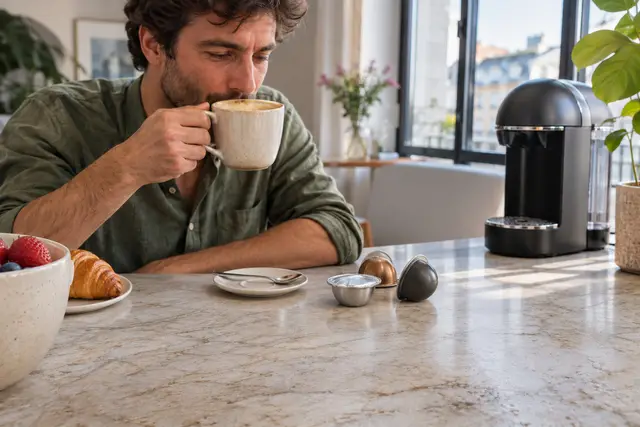
A coffee pod machine for single-cup pods is a small electric appliance that prepares one drink at a time from an individual pod of ground coffee sealed in filter paper. Water heated by a heating element passes through the pod under pressure, then drops straight into the cup. The reservoir, the pump and the pod holder make up the whole mechanism. It suits a person living alone, a couple who drink little coffee, or anyone who wants a consistent result without measuring or tamping the grounds.
One drink, one dose
The principle comes down to a single gesture: one pod, one cup. The dose of ground coffee is fixed by the pod's maker, which removes measuring errors. For someone who drinks two or three coffees a day, this is a real comfort: you never prepare more than you drink, and the coffee does not sit cooling in a jug. It also avoids pouring away the cold dregs of a pot.
Models designed for a single cup are generally smaller than two-spout appliances. Their water circuit is short, which limits the heating time and the amount of water kept in the appliance between uses.
The parts that matter
Four elements make the difference from one appliance to another. The reservoir holds the cold water; for a single cup, a modest volume is enough, provided it is easy to fill. The heating is provided by a thermoblock or a small boiler, which brings the water up to extraction temperature. The pump pushes the water through the pod. Finally, the pod holder keeps the pod properly centred, so that the water does not bypass the grounds.
- A transparent reservoir lets you see the level without removing it.
- A removable pod holder is easier to rinse.
- An adjustable drip tray takes an espresso cup and a large mug equally well.
Which pods to choose
There are two families. The rigid 44 mm pod, known as E.S.E., is an open standard: it is made by many producers and works in any appliance that accepts it. The soft pod, which is wider, is a disc of coffee between two sheets of filter paper, used in low-pressure appliances. Before buying, look for the wording on the technical sheet: “E.S.E.” or “soft pods”. A machine designed for one does not always suit the other.
For a single cup, the E.S.E. pod gives a short, concentrated drink close to an espresso. The soft pod gives a longer, milder coffee that is happily drunk from a large cup.
The volume in the cup
An espresso is served in a few tens of millilitres, while a longer coffee needs more water. Some machines memorise the volume; others make you stop the flow yourself. For daily use, a programmable button saves you from watching the appliance and gives the same result every morning. If the appliance offers only two levels, choose the one that matches your usual cup and stick to it.
Thinking about the cup before buying is useful: a tall cup does not fit under every spout. Measure the height available between the spout and the tray, then compare it with that of your favourite cup.
Preheat for a really hot coffee
A coffee made in a cold cup quickly loses a few degrees. Rinsing with no pod, by running water through, warms the circuit and the cup. This habit takes about ten seconds. Then place the pod, close the holder and start the extraction without delay: a pod left for a long time exposed to the heat of the pod holder deteriorates.
Day-to-day maintenance
After each cup, remove the used pod, rinse the pod holder and wipe the tray. The grounds in a paper pod are damp; left in the appliance, they encourage mould and odours. Once a week, wash the reservoir in clean water, with a little washing-up liquid rinsed off thoroughly, and empty the drip tray.
Limescale is the appliance's main enemy. Water that is too hard scales up the thermoblock and slows the flow. Follow the descaling frequency given in the instructions and use only the product the manufacturer recommends. A weaker flow, a change in the pump's noise and a drop in temperature are signs that should alert you before a breakdown.
Budget: at purchase and per cup
Single-cup appliances are among the cheapest in the category. The real cost is calculated mainly per pod: a coffee pod is a higher unit cost than the same dose of loose ground coffee, but lower than most drinks bought over a counter. Comparing the price per kilo of coffee is misleading; compare instead the price of a prepared cup, including water, electricity and descaler.
If you drink little coffee, a simple model is enough. If you drink five or six a day, a sturdier appliance with a good-quality pump will last longer.
Consumption and energy savings
Heating the water uses most of the electricity. An appliance with automatic standby, or a main switch, avoids leaving the thermoblock hot for hours. Unplugging the machine or using a switched power strip also cuts the small standby consumption. For a single cup there is no need to preheat for long: a few moments are enough on fast-heating models.
Common mistakes with a single-cup appliance
The first mistake is to force the pod holder shut when the pod is badly positioned: the paper tears and the grounds spill into the circuit. The second is to forget to fill the reservoir before starting the extraction, which makes the pump run dry and wears it out prematurely. The third is to store the appliance with stagnant water for several weeks: the water goes stale, takes on an unpleasant taste and encourages deposits. Empty the reservoir before a long absence, then rinse it before use resumes. Finally, avoid placing the appliance near a heat source or under a wall cabinet: the steam that escapes when the pod is removed damages wooden panels.
One last piece of advice concerns the choice of cup. A thick porcelain cup keeps the heat longer than thin glass, and a wide mug lets the aromas of a long coffee show better.
Sorting and end of life
The used paper pod contains damp grounds. Depending on local council rules, it can go with the food waste or into the compost bin when the wrapper is made entirely of paper, with no plastic or synthetic glue. If in doubt, it goes into the household rubbish. The machine itself is waste electrical equipment: it is taken back to a shop when you buy a new one, or to a recycling centre, and never goes into the ordinary bin.
Who it suits, and which habits
This appliance suits people living alone, students, individual offices and second homes that are occupied only now and then. It also appeals to those who like to change coffee with every cup: a strong coffee one morning, a decaffeinated one in the afternoon, without mixing flavours. Conversely, if you often have guests or if two people drink their coffee at the same time, a two-spout model will be more practical.
Can you make two cups in a row?
Yes, but one after the other. Wait for the thermoblock to return to temperature before the second extraction, otherwise the coffee comes out less hot and less fragrant.
Can a pod be used twice?
No. The first extraction removes most of the aromas; a second pass gives a weak, bitter drink with no appeal.
Should you rinse the machine between two coffees?
A simple run of water with no pod is enough when you change type of coffee, in particular when going from a strong coffee to a decaffeinated one. Rinsing prevents the aromas of the first from turning up in the second.