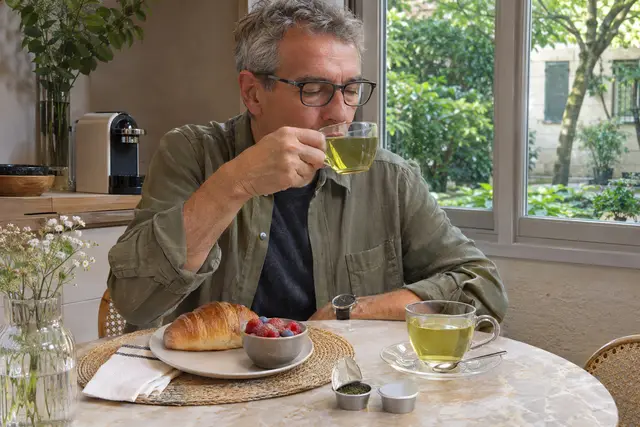
A yerba maté tea pod is a single portion of dried, ground leaves of a South American holly, Ilex paraguariensis, placed in a paper filter or in a capsule. It is prepared with hot water, in a cup or in a compatible machine. The drink contains caffeine and has a characteristic vegetal bitterness. It is aimed at adults who want an alternative to coffee or tea, without the traditional paraphernalia of the gourd and the bombilla, the filtering straw used to drink it.
Origin of the plant
Maté is made from the leaves of a shrub of the holly family, Ilex paraguariensis, grown mainly in Paraguay, Argentina, Uruguay and southern Brazil. The leaves and small stems are harvested, dried, often over a wood fire or in hot air, then coarsely ground. The word yerba simply means herb in Spanish, and maté refers at once to the plant, the drink and the gourd in which it is traditionally served.
The drink is part of the social life of several South American countries, where a single vessel is shared at family or friendly gatherings. The pod format is a modern adaptation that makes it possible to prepare it without traditional equipment.
A stimulating drink
Yerba contains caffeine, sometimes called mateine, as well as other compounds such as theobromine and polyphenols. It therefore stimulates the body, rather like coffee or tea, with an effect that many describe as gentler. The real amount of caffeine varies greatly according to the proportion of leaves and stems, the fineness of the grind and the length of contact with the water.
This content calls for the same precautions as any caffeinated drink: moderation in pregnancy, sleep problems, palpitations, anxiety or high blood pressure, and a doctor's advice if you are being treated for a heart condition.
Format and compatible machines
A pod of this type is often a soft filter-paper pod, with a diameter of around 60 to 70 mm, intended for soft-pod machines. There are also rigid capsules, which work only in the intended system. Since yerba is a rather coarse powder, the filter must be tight enough to retain the particles, otherwise the drink turns cloudy.
A pod machine does not reproduce the traditional preparation exactly: it replaces the bombilla, the metal filtering straw, with filter paper. The result is simpler and quicker, at the price of a less ritual experience.
Taste and aromatic profile
The taste is characterised by a marked vegetal bitterness and a grassy, sometimes smoky note, depending on the drying. Some so-called green yerbas keep a fresh, tonic taste, while others, aged in vats, offer rounder aromas. To soften the bitterness, maté is readily combined with mint, lemon, orange or ginger.
Tereré, the variant served iced, is widely drunk in Paraguay in periods of intense heat. In a cup, a similar result is obtained by letting the preparation cool and pouring it over ice with a few drops of lemon.
Preparation and water temperature
Connoisseurs recommend hot but not boiling water, in the order of 70 to 80 °C for the traditional preparation. Water that is too hot scorches the leaves and accentuates the bitterness. In a machine, fine control of the temperature is rarely available: you can then let the hot water rest for a few moments before pouring it.
An infusion time of three to five minutes suits a cup made by hand. The pod can be used a second time, and even more in traditional practice, where the vessel is refilled several times over the same yerba, with a taste that gradually fades.
Should maté be drunk very hot?
No. The International Agency for Research on Cancer has classified drinks consumed at more than 65 °C as probably carcinogenic, and links have been observed between maté drunk very hot and cancer of the oesophagus. It is therefore recommended to let the drink cool slightly before drinking it.
Precautions for use
The drink is not suitable for young children. Pregnant or breastfeeding women must take their total caffeine intake into account and ask a healthcare professional for advice. When taking medication, in particular for anxiety, diabetes or heart rhythm disorders, the pharmacist can point out possible interactions.
It is better to avoid the drink late in the evening if you are sensitive to caffeine. The leaflet of the product should be read with care.
Price and quality
The cost of a pod depends on the origin, the method of drying and the type of leaves. A blend containing a lot of fine powder gives a more bitter drink, whereas a blend rich in whole leaves is gentler. An organic or fair-trade label tells you about the framework of production, without guaranteeing any particular taste.
It is worth comparing the price per cup rather than the price of the box, since formats vary between a few pods and family packs.
Storage
Yerba is sensitive to damp and to odours, which it absorbs easily. The box must stay well closed, at room temperature and away from light. A pod whose paper has softened or whose smell has turned rancid should be thrown away. The best-before date shown on the packaging serves as a guide.
Sorting, recycling and alternatives
Compostable filter paper goes into the compost or food waste when that wording appears on the packaging. Rigid capsules follow the sorting instructions of the municipality, which differ from place to place. Spent yerba is a good addition to compost, provided the filter is compostable too.
Alternatives range from loose maté, prepared with a gourd and a bombilla, to the infusion bag. Loose leaf gives the drink that is most faithful to tradition and reduces waste, but it requires learning the technique and careful cleaning of the vessel, which grows mould if it stays damp.
Maté, tea and coffee: what are the differences?
Tea comes from the tea plant, coffee from roasted beans, and maté from the leaves of a South American holly. All three contain caffeine, but the aromatic profile and the feel in the mouth differ. Maté stands out for its vegetal bitterness and its ritual of sharing, which the pod format makes no attempt to imitate.
For a first try, a blend flavoured with lemon or mint is a good way in, because the bitterness of pure maté often surprises beginners.
When to drink it
The drink is readily taken in the morning or early in the afternoon, as an alternative to coffee. Served from a pod, it finds its place at the office, where the machine replaces the kettle and the gourd. Sports enthusiasts also enjoy it before exercise, although no particular result is guaranteed.
Frequently asked questions
Does yerba contain gluten?
The plant does not naturally contain any. Flavoured blends or processed products may, however, contain added ingredients: only the list of ingredients on the packaging can confirm this.
Can it be drunk with milk?
In the South American tradition, maté is drunk plain or sometimes sweetened. A mixture with milk exists in certain regions in the form of maté cocido with milk, but it remains a local and optional variant.
Which cup should you choose?
A cup of 150 to 200 ml suits a standard soft pod. A larger volume dilutes the drink and heightens the impression of a weak herbal tea rather than a tonic maté.
Common mistakes
The most frequent is to pour boiling water over the yerba, which destroys the delicacy of the aromas. The second is to keep the opened pod in a damp kitchen. The third is to judge the product on the first cup: the palate gradually grows used to the bitterness, and the addition of a little lemon is often enough to make the drink pleasant.